It's maybe five minutes onscreen

Apr. 13th, 2026 11:18 pm
sovay: (Silver: against blue)
[personal profile] sovay
Things in my neighborhood are starting to bloom, so I got out of the house in the on-and-off overcast and photographed some.

When it's just me against the sky. )

I agree with this post that the human body was not designed to know what the worst person in the world is doing every fifteen minutes, but it was not possible for me to avoid hearing that the man in the White House shared AI slop of himself as Jesus healing the sick for Pascha. It was much nicer to discover that Aimee Mann circa 'Til Tuesday belonged so clearly to the elusive Bowie–Swinton species. She could have starred in Liquid Sky (1982).

Who dares

Apr. 13th, 2026 11:04 pm
viridian5: (Joey (Argh))
[personal profile] viridian5
My federal and state tax forms were e-filed and accepted this weekend. I'm so glad that's over.

I sent e-mails to three different taxslayer e-mail addresses trying to get help with a problem, only for all of them to try to toss me somewhere else. The third one at least suggested something, even as they said they weren't allowed to. They didn't tell me how to do it, but they made a suggestion. I figured it out after playing around with various things for thirty minutes.

+++

For some reason, Queen's A Kind of Magic, their Highlander soundtrack, came to my mind, so I borrowed it from the library. Of course, "Princes of the Universe" is here, but you probably know that one so what I put here is "Who Wants to Live Forever," which is about the movie's love story and can make me teary-eyed. It has churchy organs, some orchestral sections, and Freddie Mercury really feeling the lyrics.


+++

Regular Car Reviews thoroughly roasts the Cybertruck, with some of the comments/insults making me literally LOL. Also funny to me was that when I looked at the roads they're riding on, my immediate thought was "This is Pennsylvania all right."

Some chengyu and poetry (古诗)

Apr. 13th, 2026 07:07 pm
sakana17: distance shot of the 10 cast members of become a farmer on top of the great wall of china (become-a-farmer-2)
[personal profile] sakana17
During their most recent《你好种地少年3》series, the farmboys played charades where they had to guess chengyu and, when that proved too easy, some bits of 古诗 (classical poetry). They had all learned the poems as kids in school.

成语 (chengyu):
狼狈为奸 - láng bèi wéi jiān
守株待兔 - shǒu zhū dài tù
呆若木鸡 - dāi ruò mù jī
肝肠寸断 - gān cháng cùn duàn
蜻蜓点水 - qīng tíng diǎn shuǐ

古诗 (poetry):
Note: I transcribed these from the show, and some of the poems are snippets only. I've linked to sources that have the original lines and English translation.
1) 《静夜思》【唐】李白
床前明月光
疑是地上霜
举头望明月
低头思故乡

2) 《咏鹅》【唐】骆宾王
鹅,鹅,鹅,
曲项向天歌。
白毛浮绿水,
红掌拨清波。

3) 《憫农》【唐】李绅
锄禾日当午,
汗滴禾下土。
谁知盘中餐,
粒粒皆辛苦。

4) 《望庐山瀑布》【唐】李白
飞流直下三千尺,
疑是银河落九天。

5) 《早发白帝城》【唐】李白
两岸猿声啼不住
轻舟已过万重山

6) 《春晓》【唐】孟浩然
春眠不觉晓,
处处闻啼鸟。
夜来风雨声,
花落知多少。

7) 《绝句》【唐】杜甫
两个黄鹂呜翠柳,
一行白鹭上青天。

8) 《游山西村》【南宋】陆游
山重水夏疑无路
柳暗花明又一村

9) 《清明》【唐】杜牧
借问酒家何处有
牧童遥指杏花村

10) 《游园不值》【南宋】叶绍翁
春色满园关不住
一枝红杏出墙来

If you're curious what the charades were like, it's on YouTube with Chinese hardsubs and poor quality English MTL subs. (The link is cued to beginning of the game, and it continues in the next part, from the video's start to 7:52.) It was really interesting (and fun) to see how they acted out homonyms.
delphi: A carton of fresh blueberries. (blueberries)
[personal profile] delphi
Fandom 50 #9

For my 1985 pick, it feels like a good day for five minutes of surreal geography-themed art pop.

Map of the World, Pt. II by Jane Siberry
mxcatmoon: Sonny and Rico with kitten (MV: Kitty)
[personal profile] mxcatmoon

Is anyone noticing that Dreamwidth loads really slowly these days? Sometimes I have to wait almost half a minute when all my other sites are almost instantaneous. So, it's not my computer.

I've been keeping it to myself, but the reason I haven't been engaging as much lately as usual because I've been having some health issues. I'm very stressed out about. I'm trying to remain positive, but I'm afraid it may not be anything simple this time. I even have a bag packed, in case I end up with a hospital stay. The worst part is, I'm so poor I can't afford this shit (yes, even with insurance, our hours have been cut at work and I can barely afford food). I'm not certain what's going to happen if a lot of bills get run up. Keep me in your prayers, thanks.

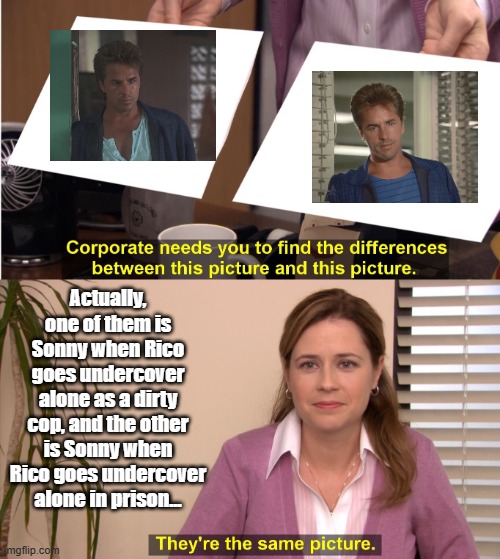
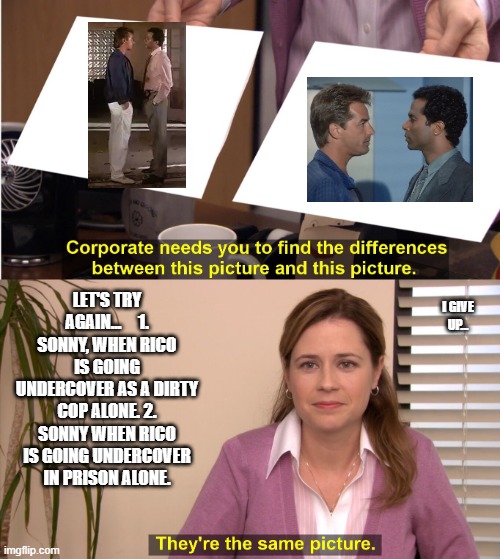
I've been distracting myself with Miami Vice. Still haven't finished my rewatch but I'm on the last episode now. I'm mad at Rico, my beloved has pissed me off. 😉 I'll get over it and forgive him, though.

What the heck, I'll post the memes I just did here.
difference meme

difference meme02

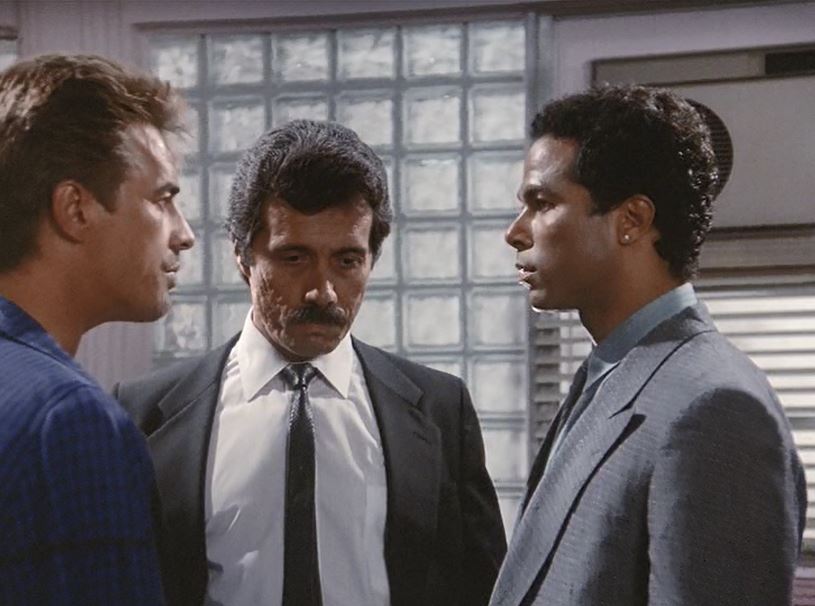
Then there's Castillo, Rico, Sonny, and the vein in Sonny's forehead: 😉
He's just a little bit protective...

walkalone13

Daily Check-In

Apr. 13th, 2026 06:03 pm
starwatcher: Western windmill, clouds in background, trees around base. (Default)
[personal profile] starwatcher posting in [community profile] fandom_checkin
 
This is your check-in post for today. The poll will be open from midnight Universal or Zulu Time (8pm Eastern Time) on Monday, April 13, to midnight on Tuesday, April 14. (8pm Eastern Time).

Poll #34473 Daily Check-in
Open to: Access List, detailed results viewable to: Access List, participants: 19

How are you doing?

I am OK.
13 (68.4%)

I am not OK, but don't need help right now.
5 (26.3%)

I could use some help.
1 (5.3%)

How many other humans live with you?

I am living single.
6 (31.6%)

One other person.
10 (52.6%)

More than one other person.
3 (15.8%)


Please, talk about how things are going for you in the comments, ask for advice or help if you need it, or just discuss whatever you feel like.
 
[syndicated profile] eff_feed

Posted by Cliff Braun, Rory Mir

California’s bill, A.B. 2047, will not only mandate censorware — software which exists to bluntly block your speech as a user — on all 3D printers; it will also criminalize the use of open-source alternatives. Repeating the mistakes of Digital Rights Management (DRM) technologies won’t make anyone safer. What it will do is hurt innovation in the state and risk a slew of new consumer harms, ranging from surveillance to platform lock-in. California must stand with creators and reject this legislation before it’s too late.

3D printing might evoke images of props from blockbuster films, rapid prototyping, medical research, or even affordable repair parts. Yet for a growing number of legislators, the perceived threat of “ghost guns” is a reason to impose restrictions on all 3D printers. Despite 3D printing of guns already being rare and banned under existing law, California may outright criminalize any user having control over their own device. 

This bill is a gift for the biggest 3D printer manufacturers looking to adopt HP’s approach to 2D printing: criminalize altering your printer’s code, lock users into your own ecosystem, and let enshittification run its course. Even worse, algorithmic print blocking will never work for its intended purpose, but it will threaten consumer choice, free expression, and privacy.

A misstep here can have serious repercussions across the whole 3D printing industry, lead the way for more bad bills, and leave California with an expensive and ineffective bureaucratic mess.

What’s in the California Proposal?

Compared to the Washington and New York laws proposed this year, California’s is the most troubling. It criminalizes open source, reduces consumer choice, and creates a bureaucratic burden.

Criminalizing Open Source and User Control

A.B. 2047 goes further than any other legislation on algorithmic print-blocking by making it a misdemeanor for the owners of these devices to disable, deactivate, or otherwise circumvent these mandated algorithms. Not only does this effectively criminalize use of any third-party, open-source 3D printer firmware, but it also enables print-blocking algorithms to parallel anti-consumer behaviors seen with DRM.

Manufacturers will be able to lock users into first-party tools, parts, and “consumables” (analogous to how 2D printer ink works). They will also be able to mandate purchases through first-party stores, imposing a heavy platform tax. Additionally, manufacturers could force regular upgrade cycles through planned obsolescence by ceasing updates to a printer’s print-blocking system, thereby taking devices out of compliance and making them illegal for consumers to resell. In short, a wide range of anti-consumer practices can be enforced, potentially resulting in criminal charges.

Independent of these deliberate harms manufacturers may inflict, DRM has shown that criminalizing code leads to more barriers to repair, more consumer waste, and far more cybersecurity risks by criminalizing research.

Less Consumer Choice

The bill favors incumbent manufacturers over newer competitors and over the interests of consumers.

Less-established manufacturers will need to dedicate considerable time and resources to implementing the ineffective solutions discussed above, navigating state approval, and potentially paying licensing fees to third-party developers of sham print-blocking software. While these burdens may be absorbed by the biggest producers of this equipment, it considerably raises the barrier to entry on a technology that can otherwise be individually built from scratch with common equipment. The result is clear: fewer options for consumers and more leverage for the biggest producers. 

Retailers will feel this pinch, but the second-hand market will feel it most acutely. Resale is an important property right for people to recoup costs and serves as an important check on inflating prices. But under this bill, such resale risks misdemeanor penalties. 

The bill locks users into a walled garden; it demands manufacturers ensure 3D printers cannot be used with third-party software tools. By creating barriers to the use of popular and need-specific alternatives, this legislation will limit the utility and accessibility of these devices across a broad spectrum of lawful uses.

Bureaucratic Burden 

A.B. 2047’s title 21.1 §3723.633-637 creates a print-blocking bureaucracy, leaning heavily on the California Department of Justice (DOJ). Initially, the DOJ must outline the technical standards for detecting and blocking firearm parts, and later certify print-blocking algorithms and maintain lists of compliant 3D printers. If a printer or software doesn’t make it through this red tape, it will be illegal to sell in the state.

The bill also requires the department to establish a database of banned blueprints that must be blocked by these algorithms. This database and printer list must be continually maintained as new printer models are released and workarounds are discovered, requiring effort from both the DOJ and printer manufacturers. 

For all the cost and burden of creating and maintaining such a database, those efforts will inevitably be outpaced by rapid iterations and workarounds by people breaking existing firearms laws.

Not just California

Once implemented, this infrastructure will be difficult to rein in, causing unintended consequences. The database meant for firearm parts can easily expand to copyright or political speech. Scans meant to be ephemeral can be collected and surveilled. This is cause for concern for everyone, as these levers of control will extend beyond the borders of the Golden State.

While California is at the forefront of print blocking, the impacts will be felt far outside of its borders. Once printer companies have the legal cover to build out anti-competitive and privacy-invasive tools, they will likely be rolled out globally. After all, it is not cost-effective to maintain two forks of software, two inventories of printers, and two distribution channels. Once California has created the infrastructure to censor prints, what else will it be used for?

As we covered in “Print Blocking Won’t Work” these print-blocking efforts are not only doomed to fail, but will render all 3D printer users vulnerable to surveillance either by forcing them into a cloud scanning solution for “on-device” results, or by chaining them to first-party software which must connect to the cloud to regularly update its print blocking system.

This law demands an unfeasible technological solution for something that is already illegal. Not only is this bad legislation with few safeguards, it risks the worst outcomes for grassroots innovation and creativity—both within the state and across the global 3D printing community.

California should reject this legislation before it’s too late, and advocates everywhere should keep an eye out for similar legislation in their states. What happens in California won't just stay in California.

[ SECRET POST #7038 ]

Apr. 13th, 2026 04:57 pm
case: (Default)
[personal profile] case posting in [community profile] fandomsecrets

⌈ Secret Post #7038 ⌋

Warning: Some secrets are NOT worksafe and may contain SPOILERS.


01.


More! )


Notes:

Secrets Left to Post: 01 pages, 24 secrets from Secret Submission Post #1005.
Secrets Not Posted: [ 0 - broken links ], [ 0 - not!secrets ], [ 0 - not!fandom ], [ 0 - too big ], [ 0 - repeat ].
Current Secret Submissions Post: here.
Suggestions, comments, and concerns should go here.
musesfool: Kory from Titans (i must confess i still believe)
[personal profile] musesfool
Today's poem:

Eurydice
by Carol Ann Duffy

Girls, I was dead and down
in the Underworld, a shade,
a shadow of my former self, nowhen.
It was a place where language stopped,
a black full stop, a black hole
Where the words had to come to an end.
And end they did there,
last words,
famous or not.
It suited me down to the ground.

So imagine me there,
unavailable,
out of this world,
then picture my face in that place
of Eternal Repose,
in the one place you'd think a girl would be safe
from the kind of a man
who follows her round
writing poems,
hovers about
while she reads them,
calls her His Muse,
and once sulked for a night and a day
because she remarked on his weakness for abstract nouns.
Just picture my face
when I heard –
Ye Gods –
a familiar knock-knock at Death's door.

Him.
Big O.
Larger than life.
With his lyre
and a poem to pitch, with me as the prize.

Things were different back then.
For the men, verse-wise,
Big O was the boy. Legendary.
The blurb on the back of his books claimed
that animals,
aardvark to zebra,
flocked to his side when he sang,
fish leapt in their shoals
at the sound of his voice,
even the mute, sullen stones at his feet
wept wee, silver tears.

Bollocks. (I'd done all the typing myself,
I should know.)
And given my time all over again,
rest assured that I'd rather speak for myself
than be Dearest, Beloved, Dark Lady, White Goddess etc., etc.

In fact girls, I'd rather be dead.

But the Gods are like publishers,
usually male,
and what you doubtless know of my tale
is the deal.

Orpheus strutted his stuff.

The bloodless ghosts were in tears.
Sisyphus sat on his rock for the first time in years.
Tantalus was permitted a couple of beers.
The woman in question could scarcely believe her ears.

Like it or not,
I must follow him back to our life –
Eurydice, Orpheus' wife –
to be trapped in his images, metaphors, similes,
octaves and sextets, quatrains and couplets,
elegies, limericks, villanelles,
histories, myths...

He'd been told that he mustn't look back
or turn round,
but walk steadily upwards,
myself right behind him,
out of the Underworld
into the upper air that for me was the past.
He'd been warned
that one look would lose me
for ever and ever.

So we walked, we walked.
Nobody talked.

Girls, forget what you've read.
It happened like this –
I did everything in my power
to make him look back.
What did I have to do, I said,
to make him see we were through?
I was dead. Deceased.
I was Resting in Peace. Passé. Late.
Past my sell-by date...

I stretched out my hand
to touch him once
on the back of the neck.
Please let me stay.
But already the light had saddened from purple to grey.

It was an uphill schlep
from death to life
and with every step
I willed him to turn.
I was thinking of filching the poem
out of his cloak,
when inspiration finally struck.
I stopped, thrilled.
He was a yard in front.
My voice shook when I spoke –
Orpheus, your poem's a masterpiece.
I'd love to hear it again…


He was smiling modestly,
when he turned,
when he turned and he looked at me.

What else?
I noticed he hadn't shaved.
I waved once and was gone.

The dead are so talented.
The living walk by the edge of a vast lake
near, the wise, drowned silence of the dead.

*

Initial Pinch Hits: #11-23

Apr. 13th, 2026 03:00 pm
longficmod: Photo of a woman tying a running shoe (Default)
[personal profile] longficmod posting in [community profile] fandom5k
We have 23 initial pinch hits! This post is #11-23. #1-10 are here.

If you can claim one of these, please comment with your AO3 name and the number of the pinch hit you want. All comments are screened.
 
Like main assignments, these pinch hits are due on 5 June, and they require a check-in during the week of 8-15 May.
 
You may ask to exchange your assignment for an open pinch hit. If you are given that pinch hit and fulfill it, this won't count as a default. Please tell me in your comment requesting a pinch hit that you are asking to swap.


PH 11 - The Pitt (TV), 鬼滅の刃 | Demon Slayer: Kimetsu no Yaiba (Anime & Manga), Crossover Fandom )


PH 12 - Royal Affairs - Harris-Powell-Smith, Crossover Fandom, Corruption of Champions 2, Avengers: Earth's Mightiest Heroes (Cartoon) )


PH 13 - Stranger Things (TV 2016), The West Wing, 9-1-1 (TV) )


PH 14 - MF Ghost (Anime), Psycho-Pass, Shin Sangokumusou | Dynasty Warriors, 機動戦士ガンダム 閃光のハサウェイ | Mobile Suit Gundam: Hathaway's Flash (Movies), 龍が如く | Ryuu ga Gotoku | Yakuza (Video Games) )


PH 15 - Sword Art Online (Anime & Manga), 僕だけがいない街 | Boku dake ga Inai Machi | ERASED (Anime & Manga), 炎の蜃気楼[ミラージュ] | Honoo no Mirage | Mirage of Blaze, John Wick (Movies), Sneakers (1992), The Fall of the House of Usher (TV 2023), Father Brown (2013), The Queen's Gambit (TV), Squid Game (TV 2021), Death Note (Movies 2006-2016) )


CLAIMED - PH 16 - Twilight Series - Stephenie Meyer, Interstellar (2014), Cerulean Chronicles Series - TJ Klune )


PH 17 - ไหนใครว่าพวกมันไม่ถูกกัน | Head 2 Head (TV 2025), KinnPorsche: The Series (TV), เพื่อนายแค่หนึ่งเดียว | Never Let Me Go (TV 2022), ข้ามฟ้าเคียงเธอ | The Next Prince (TV 2025), บ้านหลอน ON SALE | Peaceful Property (TV), Thai Actor RPF, เธม-โป้ Heart That Skips a Beat | Thame-Po: Heart That Skips a Beat (TV), 천둥구름 비바람 | Thundercloud Rainstorm (TV) )


PH 18 - Gran Hotel (TV), 무빙 | Moving (TV), 설강화 | Snowdrop (TV) )


PH 19 - The Amazing World of Gumball, Osmosis Jones (2001), Dandy's World (Roblox), Dandy's World (Roblox), Dandy's World (Roblox), Osmosis Jones (2001), The Amazing World of Gumball, The Amazing World of Gumball )


PH 20 - Baldur's Gate (Video Games), Clair Obscur: Expedition 33 (Video Game), Mass Effect Trilogy, Original Work )


PH 21 - Political RPF - US 21st c., American Civil War RPF, 19th Century CE RPF )


PH 22 - 獅子の踊り子 | Shishi no Odoriko (Manga), Noctilucent: Before Dawn (Video Game), Tekken (Video Games), 龍が如く | Ryuu ga Gotoku | Yakuza (Video Games) )


PH 23 - New Dangan Ronpa V3: Everyone's New Semester of Killing, Poppy Playtime (Video Game), Persona 5, The Amazing Digital Circus (Web Series) )


Initial Pinch Hits: #1-10 (of 23)

Apr. 13th, 2026 01:57 pm
longficmod: Photo of a woman tying a running shoe (Default)
[personal profile] longficmod posting in [community profile] fandom5k
We have 23 initial pinch hits! This post is #1-10. If you can claim one of these, please comment with your AO3 name and the number of the pinch hit you want. All comments are screened.
 
Like main assignments, these pinch hits are due on 5 June, and they require a check-in during the week of 8-15 May.
 
You may ask to exchange your assignment for an open pinch hit. If you are given that pinch hit and fulfill it, this won't count as a default. Please tell me in your comment requesting a pinch hit that you are asking to swap.

EPH 1 - Mononoke-hime | Princess Mononoke, Soul Eater (Anime & Manga), ダンジョン飯 | Dungeon Meshi | Delicious in Dungeon, ちはやふる | Chihayafuru (Anime & Manga), 逆転裁判 | Gyakuten Saiban | Ace Attorney, Arcane: League of Legends (Cartoon 2021) )


EPH 2 - Star Wars: Rebels, Star Wars: The Bad Batch (Cartoon), Crossover Fandom, Star Wars: Resistance (Cartoon), Star Wars Original Trilogy )


EPH 3 - Young Sherlock (TV 2026), Biohazard | Resident Evil (Gameverse), Fallout (TV 2024), Hades (Supergiant Games Video Games), Andor (TV) )


EPH 4 - 名探偵コナン | Detective Conan | Case Closed, 憂国のモリアーティ | Yuukoku no Moriarty | Moriarty the Patriot (Anime), Sherlock Holmes - Arthur Conan Doyle, Kuroshitsuji | Black Butler, One Piece (Anime & Manga), Ready or Not (Movies), 镇魂 | Guardian (TV 2018), Doctor Who (2005), Original Work, DCU (Comics) )


EPH 5 - Visionaries: Knights of the Magical Light, Voltron: Lion Force (1984), Jem and the Holograms (Cartoon), G.I. Joe (Cartoon), Nancy Drew/Hardy Boys Super Mysteries - Franklin W. Dixon & Carolyn Keene, Chalion Saga - Lois McMaster Bujold, Thunderbirds (2004), Star Trek: Strange New Worlds (TV), Masters of the Universe: Revelations/Revolution (Netflix), Crossover Fandom )


EPH 6 - Harry Potter - J. K. Rowling, Beware of Chicken - Casualfarmer, Dreaming of Sunshine (Fanfic Disambiguation), Crossover Fandom )


EPH 7 - 你却爱着一个傻逼 - 水千丞 | In Love with an Idiot - Shui Qian Cheng, 小白杨 - 水千丞 | My Little Poplar - Shuǐ Qiān Chng, 老婆孩子热炕头 - 水千丞 | Lǎo P Hi Zi R Kng Tou - Shuǐ Qiān Chng, 火焰戎装 - 水千丞 | Huǒ Yn Rng Zhuāng - Shuǐ Qiān Chng, 附加遗产 - 水千丞 | F Jiā Y Chǎn - Shuǐ Qiān Chng, 职业替身 - 水千丞 | Professional Body Double - Shuǐ Qiān Chng, 我行让我来 - 酱子贝 | I Can Do It - Jing Zǐ Bi, 秉性下等 - 回南雀 | Inferior By Nature - Hu Nn Qu, 江医生他怀了死对头的崽 - 葫芦酱 | Dr. Jiang is Pregnant with His Nemesis's Child - H L Jing, Crossover Fandom )


EPH 8 - Generation Kill (TV), Justified, SAS: Rogue Heroes (TV), The Pitt (TV), The Punisher (TV 2017) )


EPH 9 - The Love Hypothesis - Ali Hazelwood, The Hurricane Wars - Thea Guanzon, Deliver Me - Ashley Hawthorne )


EPH 10 - 杀破狼 | Stars of Chaos: Sha Po Lang - priest, 僕のヒーローアカデミア | Boku no Hero Academia | My Hero Academia (Anime & Manga), 镇魂 | Guardian (TV 2018) )


EFF 🤝 HOPE: Join Us This August!

Apr. 13th, 2026 07:21 pm
[syndicated profile] eff_feed

Posted by Christian Romero

Protecting privacy and free speech online takes more than policy work—it takes community. Conferences like HOPE are where that community comes together to learn, connect, and push these ideals forward. That's why EFF is proud to be at HOPE 26.

Join us at this year's Hackers On Planet Earth, August 14-16 at the New Yorker Hotel in Manhattan! Get your ticket now and support our work: throughout April EFF will receive 10% of all ticket proceeds for HOPE 26. 

Grab your ticket!

See EFF at HOPE 26 in New York

While you're there, be sure to catch talks from EFF's technologists, attorneys, and activists covering a wide range of digital civil liberties topics. You can get a taste of the talks to come by watching last year's EFF presentations at HOPE_16 on YouTube:

How a Handful of Location Data Brokers Actively Tracked Millions, and How to Stop Them
In the past year, a number of investigations have revealed the outsized role of a few select companies in gathering, storing, and selling the location data of millions of devices - and by extension people - worldwide. This talk will elaborate on the technologies, data flows, and industry players which comprise this complicated ecosystem.

Ask EFF
Get an update on current EFF work, including the ongoing case against the "Department" of Government Oversight, educating the public on their digital rights, organizing communities to resist ongoing government surveillance, and more.

Systems of Dehumanization: The Digital Frontlines of the War Against Bodily Autonomy
Daly covers the bad Internet bills that made sex work more dangerous, the ongoing struggle for abortion access in America, and the persecution of trans people across all spectrums of life. These issue-spaces are deeply connected, and the digital threats they face are uniquely dangerous. Come to learn about these threat models, as well as the cross-movement strategies being built for collective liberation against an authoritarian surveillance state. 

Snag a ticket by the end of April to help support EFF's work ensuring that technology works for everyone. We hope to see you there!

Yesteryear, by Caro Claire Burke

Apr. 13th, 2026 11:35 am
rachelmanija: (Books: old)
[personal profile] rachelmanija


Natalie is a wildly successful trad wife influencer. She and her husband Caleb have a farm and six adorable children, and Natalie has parlayed carefully edited clips of her perfect life into a lucrative career. (She leaves out the two nannies, 30 farm hands, and the fact that Sassafras the cow is actually four sequential cows, replaced every time one dies, like goldfish.)

Then Natalie suffers a mysterious fall from grace. And then she finds herself in what appears to be an alternate version of her own life in the 1800s, with a husband very similar but not quite identical to her original husband, and children who claim to be her own. Has she time traveled? Is she delusional? Has she gotten kidnapped into a non-consensual reality show?

This is an extremely interesting novel that makes a good companion to Saratoga Schrader's Trad Wife. The beginning of the book is extremely similar, though Natalie is much more successful than Camille. Burke's version of a trad wife influencer deluding herself and lying to her followers about her supposedly perfect life is much better-written than Schrader's. But that's a double-edged sword, because it makes Natalie much more unlikable. She's an incredibly hatable character and the book is from her POV, and that makes a lot of the book not really enjoyable to read.

But the book turns out to be much more ambitious and clever than it seems at the beginning. When I finished it, I was glad I'd read it and appreciated it a lot. That being said, I enjoyed Trad Wife more on an emotional level.

I highly recommend not clicking on the cut unless you're 100% positive you'll never read the book. I really enjoyed the non-spoiled experience.

Read more... )

Content notes: Domestic violence, rape (on-page, graphic), child abuse and neglect, farm animal neglect/poor caretaking (just mentioned), gaslighting, non-consensual drugging, current American right-wing stuff.

While attempting to buy Saratoga Schaefer's Trad Wife, I accidentally bought a different novel called Trad Wife by Michelle Brandon. And Sarah Langan is coming out with yet another book called Trad Wife in September. I am now on a mission to read all four trad wife books, to compare and contrast.

Write Every Day April 2026 - Day 13

Apr. 13th, 2026 11:31 am
carenejeans: (Default)
[personal profile] carenejeans
I dunno, Monday the 13th sounds scarier than Friday. ;-)


Quote of the Day:

(Another go-to author…)

"A work in progress quickly becomes feral. It reverts to a wild state overnight. It is barely domesticated, a mustang on which you one day fastened a halter, but which now you cannot catch. It is a lion you cage in your study. As the work grows, it gets harder to control; it is a lion growing in strength. You must visit it every day and reassert your mastery over it. If you skip a day, you are, quite rightly, afraid to open the door to its room. You enter its room with bravura, hold a chair at the thing and shouting 'Simba!'"

—Annie Dillard, The Writing Life (Harper & Row, 1989).


My Check-In:

Alibi sentence. But for a better reason this time… We had some friends come visit at the bookshop — it was closed, so it was a private party! Very nice relaxing lunch, conversation, and books. 8-)


Tally
Days 1-11 )

Day 12: [personal profile] annavere, [personal profile] badly_knitted, [personal profile] carenejeans, [personal profile] china_shop, [personal profile] cornerofmadness, [personal profile] dswdiane, [personal profile] goddess47, [personal profile] sanguinity, [personal profile] sylvanwitch, [personal profile] the_siobhan, [personal profile] trobadora

Day 13: [personal profile] china_shop


Let me know if I missed you, or if you wrote but didn't check in yet. And remember, you can join in at any time!
[syndicated profile] eff_feed

Posted by Dave Maass

When people see Customs & Border Protection's giant, tethered surveillance blimp flying 20 miles outside of Marfa, Texas, lots of them confuse it with an art installation. Elsewhere along the U.S.-Mexico border, surveillance towers get mistaken for cell-phone towers. And that traffic barrel? It's actually a camera. That piece of rusted litter? That's a camera too.

Today we are publishing a major update to our zine, "Surveillance Technology at the U.S.-Mexico Border," the first since the second Trump administration began. To help people identify the machinery of homeland security, we've added more models of surveillance towers, newly deployed military tech, and a gallery of disguised trail cams and automated license plate readers.

You can get this 40-page, full-color guide through EFF's Shop or download a Creative-Commons licensed version here.

"The Battalion Search and Rescue always carries the Electronic Frontier Foundation’s zine in our desert rig," says James Holeman, who founded the humanitarian group that looks for human remains in remote parts of New Mexico and Arizona. "We’re finding new surveillance all the time, and without a resource like that, we wouldn't know what the hell we're looking at.”

The original version of the zine was distributed nearly exclusively to our allies in the borderlands—journalists, humanitarian aid workers, immigrant advocates—to help them better identify and report on the technology they discover on the ground. We only made a handful available in our online shop, and they went fast.

This time, we've printed enough for our broader EFF membership. Even if you don't live near the border, you can support our work uncovering how the U.S. Department of Homeland Security's technology threatens human rights by picking up a copy.

The zine is the culmination of a dozen trips to the border, where we hunted surveillance towers and other tech installations. We attended multiple border security conventions to collect promotional and technical materials directly from vendors. We filed public records requests, reviewed thousands of pages of docs, and analyzed satellite imagery of the entire 2,000-mile border several times over. Some of the images came from local allies, like geographer Dugan Meyer and Borderlands Relief Collective, who continue to share valuable intelligence on the changing landscape of border surveillance.

The update is available in English, with an updated Spanish version expected later this year. In the meantime, we have reprinted the original Spanish edition.

If you want to know more, a collection of EFF's broader work on border technology is available here. And if you're curious exactly where these technologies are located, you can check our ongoing map.

SUPPORT THIS WORK

Speaking Freely: Dr. Jean Linis-Dinco

Apr. 13th, 2026 04:38 pm
[syndicated profile] eff_feed

Posted by David Greene

Dr. Jean Linis-Dinco is an activist-researcher working at the intersection of human rights and technology. Born in the Philippines and shaped by firsthand experience with inequality and state violence, Jean has spent her life pushing back against systems that profit from oppression. She refuses to accept a world where tech is just another tool for corporate gain. Instead, she fights for technologies and policies that put people before profit and justice before convenience. Jean earned her PhD in Cybersecurity from the University of New South Wales, Canberra, where she exposed how governments weaponized propaganda and disinformation during the Rohingya crisis in Myanmar. She currently serves as the Digital Rights Advisor for the Manushya Foundation.

David Greene: Welcome. To get started can you just introduce yourself to folks?

Jean Linis-Dinco: I'm not very good at introducing myself and I rarely do so within the context of work because I always believe that people are more than their jobs.

But first, I would like to thank you for this opportunity to share my thoughts. I've learned this kind of introduction from Kumu Vicky Holt Takamine in Hawai’i. She taught me how to introduce myself beyond titles.

So, my name is Jean, my waters are the West Philippine Sea, and I was born and raised in the land of resistance, one of the original eight provinces that revolted against Spain as they are represented by the eight rays of the sun on the Philippine flag. My ancestors fought for the freedom of the Filipino people against Spanish colonial rule, before we became subjugated once again, this time under the United States for another 48 years. The impacts of that history continue to reverberate through the domestic and international policies that ultimately pushed me out of my own country as an overseas Filipino worker.

DG: Can you tell us a bit about Manushya Foundation?

JLD: Absolutely. Manushya Foundation is a women-led organization that works with activists and human rights defenders who are targeted, who face harassment and transnational repression for their work. My work with them is on the policy and advocacy side in relation to their digital rights portfolio. It involves challenging laws and policies that criminalize freedom of expression or freedom of speech online.

It also means confronting the role of private corporations and private platforms. Because that power is rarely transparent. Big tech power is often unaccountable, as we've seen in recent years. Working in a civil society organization like Manushya, you get involved with the work on the ground and take part in grassroot-led advocacy confronting corporate abuse.

In my work, I have met people from all sorts of backgrounds. And across those encounters, I've noticed some troubling trends in some civil society organizations. There are heaps of civil society leaders who are very keen to have a seat at the table with big tech companies. It’s often hidden behind the language of ‘stakeholder engagement’. We refuse to do that at Manushya Foundation. We don’t want to be used as a rubber stamp for decisions that have already been made behind NDAs or decisions where communities most affected by these technologies were never even in the room to begin with.

I think civil society organizations should not allow themselves to be drawn into that orbit. That is very contentious in this era, because I feel like civil society bought the story that big tech could be partners in progress. We walked into their boardrooms, signing NDAs as if proximity to power meant that we were shaping it. And we've seen how in the end we're actually just giving them legitimacy. They turn our critiques and our statements to endorsements. I don't think there is any progressive form of collaboration with big tech companies that is not extractive, because the uncomfortable truth is that not everyone who wants a seat at the table is there to change what is being served.

DG: I, as someone who participates in multi-stakeholder things all the time, I completely hear that criticism. One of the things I've said is, multi-stakeholder engagement as a member of civil society takes a few forms. One, you're in the room, but you don't have a seat at the table. Two, you have a seat at the table, but you don't have a microphone. And three, they give you a microphone, but they leave the room when you talk. When we as civil society do engage, we have to be very, very intentional about ensuring it’s effective engagement. We've left many things that were “multi-stakeholder” because it was actually just NGO-washing. You know, it was only so they could say that we were sort of invited to the cocktail party afterwards.

 I've heard from you before that Manushya has a bit of a regional focus. Would you say it has a feminist focus or is it broader in terms of marginalized communities?

JLD: At its core, Manushya is a decolonial intersectional feminist organization. What that means is that we are fundamentally concerned with systems of power. In our work, we always ask who holds the power? Who is crushed by it? And who has been deliberately kept from it?

Personally, I am critical of lean-in feminism, which was popularized by a certain Meta executive. I do not agree with that kind of feminism, because it tells us women that if we just work harder, speak louder within existing power structures, we will be free. But free to do what, exactly? To participate in the same system that exploits people? The women who can afford to lean in are women who already occupy a certain class position that makes them legible to power. And most of them are white women who already have the capacity or already have a standing in society to be listened to.

I cannot lean in. Because lean-in feminism was never designed for women like me.

And then there is girl boss feminism, which I am also very, very critical of. Because more often than not, the women who call themselves girl bosses or self-made are not actually self-made. Behind every ‘self-made’ woman is a hidden economy of invisible labor. Often, they have maids. And often, those maids are Filipino women, women like my mother. Girl boss feminism is about one woman’s liberation built on another woman's bondage. I think it is absurd to call it feminism when it is basically just class warfare with better branding.

So, yes. It gets very personal.

DG: Why don’t you tell us what freedom of expression and free speech mean to you?

 JLD: Well, there is this concept of freedom of speech and freedom of expression, and it is viewed as something abstract because we cannot see speech. It is intangible. We can hear it, but we cannot see it. It's not something that we hold. It is not like food, water or housing. That is precisely the problem. Because at its core freedom of expression must be understood through material conditions.

What that means is that it dies in the structures that govern who gets heard, who gets punished, who gets killed, who is made disappeared, whose voices are treated as disposable. I would say freedom of expression must be understood as inseparable from justice because I do not believe anyone can claim to defend freedom of expression while tolerating systems that silence through fear, that silence through poverty, that silence through surveillance. Because a person working two jobs to make ends meet, a person targeted by the state, a person whose community is over-policed, I don't think they stand on equal ground with a media mogul or a political elite.

The definition of free expression must move beyond the question of whether speech is allowed. The real foundation of freedom of expression and freedom of speech is who can speak without consequences and who pays the price for doing so. It demands responsibility and it's not a shield for domination, because when speech is used to dehumanize or to incite violence or to reinforce structures of oppression, the imperialism of domination, then that participates in harm.

A serious commitment to freedom requires us to confront that harm and not hide behind languages of rights while ignoring the realities of power.

DG: How do you see that? What's the example of how that plays out, for instance in the digital rights realm now?

JLD: Well, there is, as you know—one could say it's even more evident in the United States—the “freedom of speech absolutist” as we’ve seen through Elon Musk. I don’t think he actually believes in freedom of speech at all. Because from what it appears, what he only cares about is maintaining the conditions under which people who look like him get to speak.

Speech does not exist in a vacuum. It is always in service of something.

The question is what kind of society are we actually building? I want a society where people can speak truthfully about the conditions and be heard, where dissent is not criminalized and where expression becomes a force for transformation rather than a tool for control. Free speech is a collective condition and not an individual right. It is inseparable from the question of what kind of society we are building. Because you cannot suddenly say that you are for freedom of expression while owning the platform that decides whose speech is amplified and whose is buried by an algorithm designed to serve capital. Building that society requires dismantling the structures that have always decided who gets to speak and who gets disappeared for saying the wrong thing to the wrong people.

DG: It always bothers me when I hear someone like Musk being called like a free speech absolutist, because, first of all, he’s certainly not an absolutist. I actually don't know anyone who is an absolutist. But also, I don't even think he cares about free speech that much. I think that's what we see in the US a lot now, people for whom it's not a sincere belief, but they get to speak as part of their privilege. There are also other people who think they deserve the privilege to speak because, societally, they've never been subjected to controls. When they see their community of people, who historically have been able to speak, and if it's not like that, that strikes them as the most horrible infringement on freedom of speech because it disturbs their view of privilege and who speaks. And when they see marginalized voices get silenced, it doesn't bother them because that's their norm. That's how I see it.

JLD: I'm here on a fellowship in the UK and my main study is on the American conquest of the Philippines through national language processing. And it's really interesting. I said during my talk that the United States no longer needs to use Nazi Germany as a metaphor to describe their contemporary politics. You know, American people just need to read history books not written by white men.

DG: Okay, let's dive into the age verification stuff. I think that age verification and age mandates and age regulations trying to age gate the internet are really interesting examples of the interplay between freedom of speech and a broader repression of rights. I met you at Digital Rights in Asia Pacific Assembly (DRAPAC) 2025, and I want to just give you a platform here to share your views on age verification. I was really moved by your statement at DRAPAC and what you all published on your website.

JLD: I wrote that piece at a time when Australia was pushing through that legislation. And now, we are now seeing a lot of Southeast Asian countries following that route. It always just takes one domino to fall for everyone to follow, doesn’t it?

But, what surprised me is how there’s also a lot of defeatism among some civil society organizations. I feel like they already accepted the logic of the state. There’s always this preemptive surrendering the ground on which the struggle should be taking place. And I realized the same thing is happening again.

I was on a call recently with a group of civil society organizations and someone floated the idea of supporting identity verification on social media in the Philippines as a way to counter disinformation. She came from a different understanding of the political economy, but the moment I heard it, I was disappointed. The argument is dangerous and it plays with fire because it assumes that anonymity is the problem. It assumes that the solution is to hand the state and the corporations even more power, more information, more control, and give them even more ability to track and discipline people.

I feel like this is the same trend we see with age-gating, because the claim with identity verification in the context of the Philippines, that it can be used responsibly if there are guardrails. That’s gambling with people’s lives. There has never been a single historical precedent where the state doesn't expand monitoring powers when it can once the door is open to surveillance. I don't think any guardrails will ever hold.

Civil society groups who entertain the idea of breaking anonymity to solve misinformation are rehearsing a dangerous illusion because anonymity is not a luxury. And it feels like it is being framed that way. Anonymity is a response to the political conditions where speaking freely can cost you your life. It exists because the risks are there and they are not imagined.

DG: I do think there are some people who look at age-gating from a good place. Would you say you see age verification mandates as just inevitably being tools of oppression for marginalized young people?

JLD: Above everything, it shifts the Overton window toward the broader acceptance of surveillance. In political science, when we say we're shifting the Overton window, we mean the space of political debate in public discourse is being narrowed. And now we are seeing it move towards the same old thing of, ‘if you have nothing to hide, you have nothing to worry about.’ And when you shift the Overton window towards the broader acceptance of surveillance, we're doing something very simple and very dangerous. And it turns intrusive monitoring into a normal routine of everyday life. It starts with policies that redefine surveillance as safety. Then age-gating will be established through technical infrastructure that of course can be repurposed later.

Any system capable of verifying age is also capable of verifying identity, tracking behavior, matching accounts to real people, and storing data that can be accessed by literally anyone. These policies teach people to internalize the idea that anonymity is suspicious. I think that is the most dangerous part of it--how that cultural shift is getting more and more powerful, because it moves us, the public, towards believing that only those with nothing to hide deserve rights. Then what comes next after that? Surveillance becomes a default condition for digital participation. If you cannot enter a platform without proving who you are, then surveillance becomes a prerequisite for basic communication.

Then, of course, the most powerful shift is the desensitization of younger generations to being monitored. We are raising children in a system where every login requires identity checks, they will grow into adults who assume that constant tracking is normal. Then this is what shifting the Overton window looks like in practice, because once you accept that premise, you have already surrendered the most important ground. The fight is no longer about whether surveillance should exist, but how much of it you're willing to tolerate. And we know the people who pay the price are not men in suits.

DG: Then who does pay the price?

JLD: It is always the working class children and working class families. The homeless youth who rely on social media to find food, to find a place to shower. The homeless youth who rely on social media to find community and get jobs. Then we have queer young people who are also getting locked out of spaces where they could find community. And we're locking them out of those spaces because it's ‘for their safety.’

DG: So even if there was magic tech that could solve the verification part in a completely privacy protective way, you still can't get around the infringement on the rights of young people. That seems to be the goal of the law.

JLD: Yeah, absolutely. Because why do you need to age-gate social media if it's not for control? We always frame things like this as protection under the guise of paternalism. But deep inside, we see how it is a tool to control a young population who are just now getting very politically active. And I feel like--as I'm now a geriatric millennial--people of my age and older generation have betrayed the younger generation for doing this at this precarious time, where there is a genocide happening, where there are countries being bombed. We are in a time of conflicts started by rich men, amid an ecological collapse, and our concern is children being online? Let’s not rob the children of today of their future. Age gating punishes the young for crises they did not create, whilst protecting those truly responsible from accountability.

The reality outside of social media will not go away even if kids are shut off from it. We need to confront the truth that the conditions that ruin childhood are not on social media. They are bombs, poverty, divisive politics. They're due to how we’re killing public funding and putting it through private corporations, lining the pockets of billionaires in the name of what? That is the main problem of our society, but we're not addressing that. We're just locking kids out of social media, because it's easier to do that than to address the fact that society needs an overhaul.

DG: And I think what we've seen with Australia is a lot of talk about how kids can evade the protections, whether they're using VPNs or somehow faking the ID and so all age-gating is doing is adding friction to the process. And that tends to have highly discriminatory effects also, right?

JLD: Friction might be a minor obstacle for a wealthy child with supportive parents, but friction keeps a different child off the internet. A wealthy child might have the technical means to buy a workaround to allow them to have access. There was a story in the news about an influencer family who just moved out of the country because of the age-restricted social media ban. This is the reality—people who have the means to move will move. And those who have no means to move, those who are struggling just to put food on the table—will just stay. This is anti-poor. Age gating is anti-poor.

DG: Okay, switching gears just a little bit. Was there any sort of personal experience you've had with freedom of expression that has informed how you think about the issue? Was there any kind of formative experience where you felt censored or witnessed censorship happening to someone else that really informs how you think about it now or made you care about the issue deeply?

JLD: I don't think there's one specific personal experience, per se, that has shaped how I feel about freedom and liberty in general. Growing up in the Philippines, you're forced to care, especially if you're in a working-class neighborhood like where I grew up. At an early age you realize how unfair the world is. And at first, you think that it is just unfair that the other children in my classroom families can afford a pencil case and we cannot.

It was also very difficult to fit in in the Philippines. I was labeled a troublemaker as a child. And I think some of that is actually still reminiscent of what I am today. I remember my sixth-grade history teacher approached me after reading an essay I wrote about the Philippines. She said that I should tone down my language because it will get me in trouble later in life. And I didn't understand what she meant by that. I didn't listen to her, clearly.

But that instinct stayed with me and I think it followed me through life. It followed me here—you know, the idea that you should say it, but not like that. Speak, but don't disrupt. Critique, but don't offend. And I think this is where my relationship with liberty and freedom or, specifically, freedom of expression kind of took place. It was not one defining moment, but it's in a series of small friction, as you called it. Because over time, you realize that the pressure to soften your voice never disappears. And I don't think it ever will. And I chose not to then, and I choose not to now. And there’s a lot of consequences that come with that. I don't think I will be invited to a lot of panels or keynotes. But it's a hill I'm willing to die on.

This is also the same pattern we see at a larger scale in the Philippines. You see communities speak out about land or about labor and then suddenly they are surveilled, they're either disappeared or dead. I realized quickly that freedom of expression exists on paper, but in practice it depends on who you are.

DG: Do you think there are situations where it might be appropriate for governments, or even companies, to limit freedom of expression? And if the answer is yes, what might those be?

JLD: Freedom of speech should always demand a responsibility. It has always existed within structures of power that determine whose speech is protected. So when we ask whether speech should be limited, we have to first ask. limited by whom, and in whose interest?

But I don't think the government or corporations can do that. Corporations’ end goal is always profit. And governments have historically used the language of limitation to silence the very people who dare to challenge their authority.

I believe in community-based understanding of how we actually could solve this problem, because, in the end, our relationship with our community is the core of our identity. And through those moments of interactions, we can see the freedom of speech is collective. It is always tied to building a society where people can speak truthfully, and dissent is not criminalized. It’s a matter of making sure that we understand that freedom and liberty is not an individual issue, but it’s something that affects the whole community.

DG: You’re saying this is more about community norms or our broader social compact.

JLD: When I say the community must decide, I am not offering you a utopia. I am offering you a different site of struggle. One that centers the people who have always known, in their bodies, what dehumanizing language does before it becomes dehumanizing violence. We have seen this dynamic in the way hate speech fuels violence back home in the Philippines, against indigenous communities, queer people, Muslims in Mindanao and the urban poor. Because language becomes permission that activates the system of policing and militarization already pointed at the most vulnerable. The main boundaries must be rooted in the politics of liberation, not the politics of control. Speech that punches up, that reveals injustice, that challenges power, that speech must be protected. But speech that punches down, that facilitates state violence, that dehumanizes people, I think that must be confronted, if not challenged or destroyed. We have to stop pretending that those two forms of speech are morally equivalent.

 DG: Okay, last question, one that we like to ask everyone. Who's your free speech hero? And why?

JLD: This is actually a really tough question for me because I don't actually think I have one, to be honest. I want to push back on the idea of having a single hero. Because, freedom of speech—any freedom or liberty that we have today—has never been secured by one individual alone. It has been fought for by movements. The eight-hour workday, unions, women's suffrage, despite that it was just white women who were first able to vote, and so on and so forth. It was fought for by movements, by working class people, whose names we often forget. Because a lot of movements in history, the public memory of a movement narrows it down to a single figure, often male. Movement starts from the people, because the movement would not be sustained without the drive of the working people who dedicated free, unpaid labor for it to succeed. Because without them, I don't think there would be any movement to speak of. Without them there's no platform from which any of these figures could actually emerge. 

slashmarks: (Leo)
[personal profile] slashmarks posting in [community profile] pinchhits
[community profile] goreswap is a multifandom exchange for fic and art, featuring gore. Assignments must be at least 500 words or a sketch on unlined paper, and contain significant gore content.

Rules | AO3 Collection

Current Pinch Hit Post

For details or to claim, see the pinch hit post above. These assignments are due April 22 at 11:59 PM EDT.

Pinch Hit #3: Art, Fic - 镇魂 | Guardian (TV 2018), 镇魂 | Guardian - priest

Pinch Hit #5: Fic - Night Prince - Jeaniene Frost, グノーシア | Gnosia (Visual Novel), Dracula Rising (Cartoon)

Pinch Hit #9: Fic - Anne Rice's Talamasca: The Secret Order (TV 2025), Interview with the Vampire (TV 2022), Loki (TV 2021), The Night Manager (TV 2016), D.Gray-man (Anime & Manga), Merlin (TV)

Pinch Hit #13: Art, Fic - Stranger Things (TV 2016), 지금 우리 학교는 | All of Us Are Dead (TV), The Walking Dead (TV)

Pinch Hit #14: Fic - Bleach (Anime & Manga), Frankenstein - Mary Shelley, 呪術廻戦 | Jujutsu Kaisen (Anime & Manga), Original Work

Pinch Hit #15: Art, Fic - 光が死んだ夏 | Hikaru ga Shinda Natsu | The Summer Hikaru Died (Anime), Death Note (Anime & Manga), Iron Lung (2026), MiSide (Video Game), Outlast (Video Games)

Pinch Hit #16: Art, Fic - NoPixel (Web Series), Runescape (Video Games), Iron Lung (2026), Video Blogging RPF, MiSide (Video Game), 文豪ストレイドッグス | Bungou Stray Dogs

Pinch Hit #17: Fic - Doctor Who (1963), Doctor Who (2005)

Pinch Hit #18: Fic - 炎の蜃気楼[ミラージュ] | Honoo no Mirage | Mirage of Blaze, 2001: A Space Odyssey (1968), Dexter (TV), Guillermo del Toro's Cabinet of Curiosities (TV)
Page generated Apr. 14th, 2026 07:05 am
Powered by Dreamwidth Studios